A Practical Guide to a Freelance Graphic Design Contract Template
Introduction
A freelance graphic design contract template is one of the most important tools a designer can use to protect income, time, and creative rights. Yet many freelancers still start projects without a written agreement. From my experience working with independent designers and agencies, this is one of the fastest ways to create conflict.
This guide explains how to use a contract template correctly, what clauses truly matter, and how real designers apply contracts in daily work. You will also learn how to adapt a template to different projects without legal confusion.
Why Contracts Matter for Freelance Graphic Designers
Contracts are not about distrust. Instead, they create clarity. When expectations are written, projects run smoother.
In real projects, most disputes come from unclear scope or payment terms. A proper agreement prevents these issues early.
Key benefits include:
Clear definition of deliverables
Legal protection for both parties
Professional credibility
Stronger client relationships
Without a contract, even friendly clients can misunderstand responsibilities.
What Is a Freelance Graphic Design Contract Template?
A contract template is a pre-written agreement that outlines standard terms for design services. Designers customize it for each project.
From practice, templates save time while maintaining consistency. However, they must still reflect the project’s scope and business context.
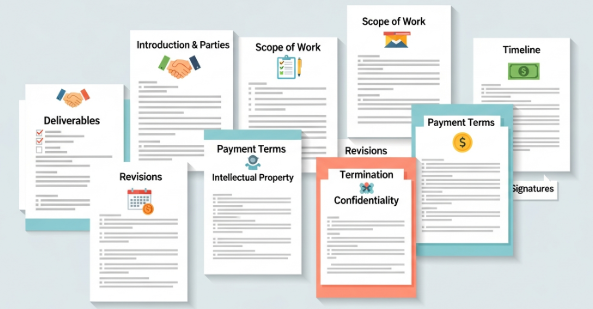
A strong template typically covers:
Project scope
Payment structure
Revision limits
Ownership rights
Termination rules
Using a template does not replace legal advice. Still, it reduces risk significantly.
Core Sections Every Contract Template Must Include
1. Project Scope and Deliverables
This section defines exactly what the designer will provide. Vague descriptions cause disputes.
Example:
Instead of “logo design,” specify:
Number of concepts
File formats
Usage context
Clear scope protects both sides.
2. Payment Terms and Schedule
This section explains how and when the designer gets paid.
Best practices from real projects:
Request 30–50% upfront
Define payment milestones
Add late payment penalties
Clear payment terms improve cash flow and professionalism.
3. Revision Policy
Unlimited revisions often lead to burnout. A contract should set boundaries.
Recommended structure:
Include a fixed number of revisions
Define what counts as a revision
State extra fees for additional changes
This clause reduces stress and scope creep.
4. Ownership and Usage Rights
This is one of the most misunderstood areas.
In practice, many designers assume clients own everything automatically. That is incorrect.
A contract should clarify:
When ownership transfers
What rights the client receives
Whether licensing applies
This protects long-term creative value.
5. Timeline and Deadlines
Timelines keep projects on track. However, they must include client responsibilities.
For example:
Client feedback deadlines
Approval windows
Delay consequences
Balanced timelines reduce friction.
6. Termination and Cancellation
Projects sometimes end early. A contract must explain what happens then.
Professional templates include:
Notice period
Payment for completed work
Ownership of unfinished files
This clause prevents emotional disputes.
How Designers Use a Freelance Graphic Design Contract Template in Real Life
Case Study 1: Branding Project
A freelance designer accepted a brand identity project without a contract. The client requested endless changes and delayed payment.
After switching to a contract template:
Revisions became limited
Payments arrived on time
Project stress dropped
The difference was structure, not creativity.
Case Study 2: Website Design Retainer
A designer used a template to set monthly deliverables and response times.
Results:
Predictable income
Clear client expectations
Long-term collaboration
Contracts support sustainable freelance income.
How to Customize a Contract Template Step by Step
A template is only effective when adapted properly.
Step 1: Adjust the Scope Section
Match deliverables exactly to the proposal. Remove anything unnecessary.
Step 2: Align Pricing with Services
Ensure the contract matches your invoice and proposal terms.
Step 3: Update Jurisdiction and Legal Terms
Set the correct country or state law.
Step 4: Review Language for Clarity
Avoid complex legal jargon. Clear language improves trust.
Common Mistakes Designers Make with Contracts
From real consulting experience, these mistakes appear often:
Using contracts copied blindly from the internet
Forgetting to update client names
Leaving scope descriptions vague
Ignoring intellectual property clauses
A template works only when reviewed carefully.
Legal Considerations Designers Should Understand
Design contracts are governed by local laws. Therefore, templates should be reviewed periodically.
For authoritative guidance, refer to resources from professional organizations such as the American Institute of Graphic Arts (AIGA).
External reference: https://www.aiga.org/resources/legal
This ensures ethical and professional standards.
When to Update Your Contract Template
Design businesses evolve. Contracts should evolve too.
Update your template when:
You raise prices
You add new services
You work with international clients
Laws change
Regular updates protect long-term growth.
Key Takeaways
Essential Points to Remember:
Contracts create clarity, not conflict
Templates save time and reduce risk
Clear scope prevents disputes
Payment terms protect income
Ownership clauses protect creative rights
Using contracts consistently strengthens your professional image.
Frequently Asked Questions
Is a freelance graphic design contract template legally binding?
Yes, when signed by both parties, it becomes a binding agreement.
Should beginners use a contract template?
Absolutely. Beginners benefit the most from structure and clarity.
Can I use one template for all projects?
You can, but customization is necessary for each project.
Do I need a lawyer to review my contract?
It is strongly recommended, especially for long-term or high-value projects.
Conclusion
A freelance graphic design contract template is not optional for serious designers. It is a practical business tool that protects time, income, and creative rights. Based on real-world experience, designers who use contracts consistently face fewer disputes and build stronger client relationships.
When used correctly, a contract template allows you to focus on design, not damage control.