Rebranding Design Strategy: How to Realign Your Brand for Long-Term Success
Rebranding design strategy is a structured approach to reshaping how a brand looks, feels, and communicates. It goes beyond visual updates. It aligns business goals, audience perception, and brand values into a unified system.
From direct experience working with startups, SMEs, and established brands, rebranding succeeds only when strategy leads design. Companies that rush visual changes often confuse customers. In contrast, those that follow a clear rebranding design strategy create trust and long-term growth.
This guide explains the process step by step, using real-world examples and actionable frameworks.
What Is a Rebranding Design Strategy?
A rebranding design strategy defines how a brand evolves to meet new business realities. It connects research, positioning, and visual identity into one direction.
Unlike simple redesigns, rebranding addresses deeper issues, such as:
Market repositioning
Mergers or acquisitions
Declining brand relevance
Audience misalignment
A strong strategy ensures consistency across all touchpoints. As a result, customers understand the brand clearly.
When a Rebranding Design Strategy Is Necessary
Not every brand needs rebranding. However, certain signals indicate it is time.
Common Triggers for Rebranding
Business model changes
Expansion into new markets
Outdated brand perception
Increased competition
Internal misalignment
For example, a SaaS company shifting from SMB to enterprise clients often needs a new brand direction. Without strategy, visual changes feel superficial.
The Core Elements of a Rebranding Design Strategy
Every effective rebranding design strategy includes foundational components.
1. Brand Audit
A brand audit evaluates the current state of the brand.
It usually includes:
Visual identity review
Messaging consistency analysis
Customer perception research
Competitor benchmarking
This step reveals gaps between intention and perception.
2. Audience and Market Research
Understanding the audience is essential. Assumptions lead to weak positioning.
Research methods include:
Customer interviews
Surveys
Social listening
Sales team insights
These insights guide design decisions later.
3. Brand Positioning and Messaging
Positioning defines how a brand stands apart.
Key questions include:
Who are we for?
What problem do we solve?
Why should customers trust us?
Clear positioning anchors the entire rebranding design strategy.
4. Visual Identity System
Only after strategy is defined does design begin.
This includes:
Logo system
Color palette
Typography
Iconography
Layout principles
Design choices must support positioning, not personal taste.
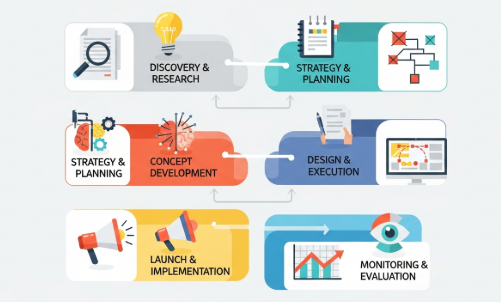
Step-by-Step Rebranding Design Strategy Process
Based on real project experience, this process delivers consistent results.
Step 1: Define Clear Objectives
Start with business goals. Examples include increasing trust or entering new markets.
Without goals, success cannot be measured.
Step 2: Align Internal Stakeholders
Internal alignment prevents resistance later.
Hold workshops with leadership, marketing, and sales teams. Shared understanding accelerates adoption.
Step 3: Develop Strategic Brand Foundations
Document core elements:
Brand purpose
Vision and mission
Core values
Brand personality
These guide every design decision.
Step 4: Translate Strategy into Design
Design becomes a tool, not decoration.
Designers use strategy to inform:
Color psychology
Typography tone
Visual hierarchy
This ensures consistency and clarity.
Step 5: Roll Out Gradually
A phased rollout reduces confusion.
Start with high-impact touchpoints:
Website
Sales materials
Social profiles
Then expand across channels.
Mini Case Study: B2B Technology Rebrand
A mid-sized B2B technology firm struggled with low trust perception. Their visuals felt outdated and inconsistent.
The Challenge
Enterprise buyers lacked confidence
Messaging was unclear
Visual identity felt generic
The Strategy
A full rebranding design strategy was applied.
Actions included:
Stakeholder interviews
Buyer persona refinement
New positioning around reliability and scale
The Result
Within six months:
Sales-qualified leads increased by 28%
Brand recognition improved
Sales cycles shortened
This outcome highlights the power of strategic rebranding.
Common Mistakes in Rebranding Design Strategy
Many rebrands fail due to avoidable errors.
Frequent Pitfalls
Starting with visuals first
Ignoring existing brand equity
Lack of internal buy-in
Inconsistent implementation
Avoiding these mistakes protects brand credibility.
How to Measure Rebranding Success
Rebranding must deliver measurable outcomes.
Key Metrics to Track
Brand awareness surveys
Conversion rates
Engagement metrics
Customer feedback
Sales performance
Tracking data ensures accountability and improvement.
Best Practices from Real Experience
From hands-on projects, several best practices stand out.
Always document the strategy
Test concepts with real users
Train internal teams
Maintain brand governance
Consistency sustains the value of rebranding.
External Expert Reference
For professional brand standards and ethics, refer to the AIGA Branding and Identity Resources, which provide authoritative guidance on strategic branding practices.
https://www.aiga.org/resources
Key Takeaways
Rebranding Design Strategy Essentials
Strategy must lead design
Research reduces risk
Clear positioning builds trust
Consistent execution drives results
A rebrand succeeds when design reflects strategic intent.
Frequently Asked Questions (FAQ)
What is the difference between rebranding and redesign?
Redesign focuses on visuals. Rebranding design strategy addresses perception, positioning, and communication.
How long does a rebranding process take?
Most projects take three to six months, depending on scope and alignment.
Is rebranding risky?
Yes, without strategy. With proper planning, risks decrease significantly.
Should small businesses invest in rebranding?
Yes, if growth goals or audience focus has changed.
Conclusion
Rebranding design strategy is a disciplined process that connects business goals with brand expression. It requires research, alignment, and strategic thinking. When executed correctly, it strengthens trust, improves clarity, and supports long-term growth.
Brands that treat rebranding as a strategic investment, rather than a visual refresh, consistently outperform competitors. A well-executed rebranding design strategy ensures relevance in evolving markets.