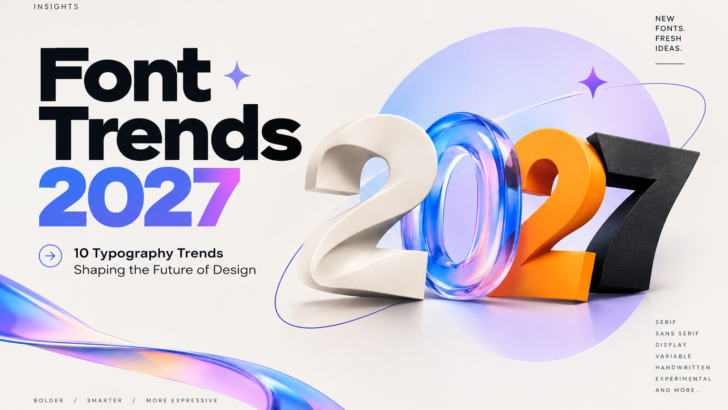
Font Trends 2027: 10 Typography Trends Shaping the Future of Design
Typography continues to evolve as designers look for new ways to create distinctive, memorable, and meaningful visual identities. As we move toward 2027, typography is becoming more expressive, flexible, and closely connected to branding, digital experiences, and visual culture.
From bold display fonts and modern serif typefaces to variable fonts and experimental lettering, the next generation of typography is likely to focus less on following a single aesthetic and more on creating a strong visual personality.
In this article, we explore 10 emerging font and typography trends to watch in 2027 and how designers can use them in branding, editorial design, packaging, websites, posters, and other creative projects.
1. Expressive and Experimental Typography
One of the most interesting directions to watch in 2027 is the continued rise of expressive typography.
Instead of simply communicating information, typography can become an important visual element of the design itself. Unusual proportions, distinctive letterforms, unexpected details, and unconventional layouts can give a brand or creative project a stronger personality.
Expressive fonts work particularly well for:
- Fashion branding
- Posters
- Music artwork
- Creative campaigns
- Magazine covers
- Packaging
- Social media graphics
The goal is not simply to make typography unusual, but to make it recognizable and memorable.
2. Modern Serif Fonts
Serif typography continues to offer designers an interesting balance between tradition and contemporary design.
Modern serif fonts can combine elegant proportions with sharper details, high contrast, unusual terminals, or simplified structures. This makes them suitable for brands that want to communicate sophistication while maintaining a contemporary appearance.
Modern serif fonts can be particularly effective for:
- Luxury branding
- Fashion
- Beauty
- Editorial design
- Hospitality
- Personal branding
- Packaging
The modern serif trend also demonstrates how classic typographic styles can be reinterpreted for contemporary visual identities.
3. Bold Display Fonts
Large, confident typography remains an important tool for creating visual impact.
Bold display fonts can immediately establish hierarchy and attract attention, especially when used in headlines, posters, packaging, and advertising.
In 2027, designers may continue to explore heavier weights combined with condensed proportions, unusual curves, oversized characters, and distinctive details.
A bold typeface does not necessarily need complicated shapes. Sometimes, a strong silhouette and carefully designed proportions are enough to make a typeface stand out.
4. Variable Fonts
Variable fonts are becoming increasingly relevant as digital design demands greater flexibility.
Unlike traditional static font families, variable fonts can provide a range of typographic variations within a single font file. Depending on the typeface, designers can adjust characteristics such as weight, width, or other custom axes.
This flexibility can be particularly useful for:
- Responsive websites
- Digital products
- Branding systems
- UI design
- Editorial platforms
- Creative websites
For designers working across multiple screen sizes and applications, variable typography can provide more control without requiring a large collection of separate font files.
5. Typography with Human Character
As digital design becomes increasingly sophisticated, there is also room for typography that feels more personal and human.
Slightly imperfect curves, organic shapes, handwritten influences, and distinctive letterforms can create a sense of warmth and authenticity.
This direction can work particularly well for brands in:
- Food and beverage
- Lifestyle
- Handmade products
- Wellness
- Creative businesses
- Independent brands
Rather than looking mechanically perfect, these typefaces can create a more approachable visual experience.
6. Retro Typography Reimagined
Designers continue to revisit typography from previous decades, but rather than copying historical styles directly, contemporary type designers are combining retro influences with modern proportions and technology.
This creates an aesthetic that feels familiar while still looking fresh.
Retro-inspired typography can be used for:
- Apparel
- Restaurants
- Coffee brands
- Posters
- Packaging
- Sports-inspired designs
- Music projects
The key is finding the right balance between nostalgia and contemporary design.
7. Condensed Typography
Condensed typefaces offer designers an efficient way to create strong headlines without requiring excessive horizontal space.
Their narrow proportions can make typography feel editorial, energetic, and modern.
Condensed fonts are particularly useful for:
- Magazine headlines
- Posters
- Fashion campaigns
- Logos
- Packaging
- Advertising
- Editorial layouts
Combining condensed typography with generous spacing can also create an elegant and sophisticated appearance.
8. High-Contrast Typography
High-contrast typefaces create a noticeable difference between thick and thin strokes.
This characteristic can produce an elegant and refined appearance, making high-contrast typography especially interesting for fashion, beauty, editorial, and luxury branding.
However, contrast should be considered alongside readability. A visually beautiful typeface still needs to perform well in the context where it will be used.
9. Custom Typography for Brand Identity
More brands are treating typography as an important part of their visual identity rather than simply selecting a font at the end of the branding process.
A distinctive typeface can help establish a recognizable voice across logos, websites, packaging, advertising, and social media.
For this reason, designers may increasingly look for fonts with:
- Multiple weights
- Alternate characters
- Ligatures
- Multilingual support
- Variable font options
- Web font formats
- Distinctive display styles
A well-designed type family can therefore become part of a broader brand system.
10. Typography as a Visual Experience
Perhaps the biggest direction to watch is the growing role of typography as an experience rather than simply text.
On digital platforms, typography can interact with animation, layout, motion, images, and responsive interfaces.
Large headlines, animated lettering, interactive variable fonts, and experimental compositions can turn type into an active part of the visual experience.
This creates new opportunities for type designers and graphic designers to explore how fonts behave beyond static layouts.
How Should Designers Prepare for 2027?
Following typography trends does not mean that every project needs to use the latest style.
The most effective approach is to understand why a particular typeface works for a specific project.
Before choosing a font, consider:
What personality should the brand communicate?
A serif might suggest elegance and tradition, while a bold sans serif can create a more direct and contemporary impression.
Where will the typography be used?
A font designed for a large poster may not be the best choice for long-form text or a website interface.
Does the typeface offer enough flexibility?
Multiple weights, italics, alternates, ligatures, multilingual characters, and variable font technology can make a type family much more versatile.
Does it remain recognizable?
Trends come and go. A distinctive typeface with strong proportions and carefully designed details can remain useful long after a particular design trend has disappeared.
Final Thoughts
The typography landscape heading toward 2027 is likely to become increasingly diverse. Instead of one dominant visual style, designers will have access to a wide range of possibilities—from expressive display fonts and modern serifs to variable fonts, condensed typefaces, and human-inspired lettering.
For designers, the opportunity is not simply to follow the next trend. It is to choose typography that gives a project its own voice.
Whether you are designing a brand identity, packaging, editorial project, website, poster, or social media campaign, the right typeface can transform ordinary words into a memorable visual statement.
Explore contemporary typefaces from Zeenesia Studio and discover fonts created for branding, editorial design, packaging, logos, and creative projects.