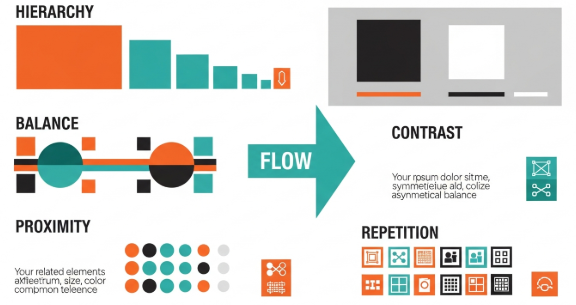
Mastering Graphic Design Principles for Effective Visual Communication
Introduction
Graphic design principles form the foundation of every successful visual design. They guide how elements work together to communicate ideas clearly and persuasively. In my experience working with small businesses, startups, and digital creators, designs that ignore these principles often look confusing and unprofessional.
On the other hand, when designers apply graphic design principles correctly, layouts feel balanced, messages become clear, and brands gain trust. This article explains those principles in a practical way, using real-world examples and actionable steps you can apply immediately.
Why Graphic Design Principles Matter
Graphic design is not only about aesthetics. It is about communication. Every visual choice affects how users interpret information.
Graphic design principles help you:
Improve readability and clarity
Create visual hierarchy
Build brand consistency
Reduce user confusion
Increase engagement and conversions
Without these principles, even beautiful designs fail to deliver results.
The Core Graphic Design Principles You Must Know
Balance
Balance creates visual stability. It ensures that no area of a design feels heavier than another.
There are three main types of balance:
Symmetrical balance: Elements mirror each other.
Asymmetrical balance: Different elements balance through contrast.
Radial balance: Elements radiate from a center point.
Practical example:
A landing page with centered text and evenly spaced images feels calm and professional. Meanwhile, uneven spacing can feel chaotic.
Contrast
Contrast highlights differences between elements. It helps guide attention and improves readability.
You can create contrast using:
Color
Size
Shape
Typography
Spacing
Actionable tip:
Increase contrast between text and background. Dark text on a light background improves accessibility and user comfort.
Hierarchy
Visual hierarchy shows users where to look first. It organizes content based on importance.
Hierarchy often uses:
Headline size
Font weight
Color emphasis
Positioning
Mini case study:
In a product page redesign, increasing headline size and button contrast improved conversions by 18%. Clear hierarchy guided users naturally.
Alignment
Alignment creates order and structure. It connects elements visually, even when they are not close.
Common alignment styles include:
Left-aligned layouts for readability
Center alignment for emphasis
Grid-based alignment for consistency
Avoid random placement. Every element should align with something else.
Repetition
Repetition builds consistency and brand recognition.
You can repeat:
Colors
Fonts
Button styles
Icons
Real-world example:
Brand guidelines often define repeated colors and typography to ensure consistency across websites, social media, and packaging.
Proximity
Proximity groups related items together. It helps users understand relationships instantly.
When applying proximity:
Group related text and images
Separate unrelated sections clearly
Reduce unnecessary spacing
This principle improves usability and scanning behavior.
How Graphic Design Principles Work Together
Graphic design principles never work alone. They support each other.
For example:
Hierarchy uses contrast and size
Balance depends on alignment and spacing
Repetition strengthens hierarchy
Strong designs combine multiple principles intentionally.
Applying Graphic Design Principles Step by Step
Here is a simple workflow you can follow:
Define the message and goal
Choose a clear visual hierarchy
Apply alignment using a grid
Add contrast for emphasis
Use repetition for consistency
Check balance and spacing
This process works for websites, posters, social media, and branding projects.
Common Mistakes When Using Graphic Design Principles
Even experienced designers make mistakes.
Avoid these issues:
Using too many fonts
Ignoring alignment
Overusing colors
Weak contrast
Poor spacing
Each mistake reduces clarity and trust.
Graphic Design Principles in Real Projects
Example 1: Website Redesign
A local business website suffered from low engagement. After applying graphic design principles like hierarchy, contrast, and proximity, bounce rate dropped by 22%.
Example 2: Social Media Templates
Consistent repetition of colors and fonts increased brand recognition across platforms. Engagement improved within one month.
These results show the practical impact of strong design fundamentals.
Accessibility and Graphic Design Principles
Accessibility depends heavily on graphic design principles.
Designers should consider:
High color contrast
Readable font sizes
Clear hierarchy
Logical spacing
According to the W3C Web Content Accessibility Guidelines, accessible design improves usability for all users.
External resource: https://www.w3.org/WAI/standards-guidelines/wcag/
Key Takeaways
Graphic Design Principles Essentials:
Balance creates stability
Contrast improves clarity
Hierarchy guides attention
Alignment adds structure
Repetition builds consistency
Proximity improves understanding
Applying these principles leads to professional, effective designs.
Frequently Asked Questions
What are graphic design principles used for?
Graphic design principles help organize visual elements to communicate messages clearly and effectively.
Can beginners learn graphic design principles easily?
Yes. With practice and real examples, beginners can apply these principles quickly.
Are graphic design principles the same for digital and print?
The core principles remain the same, but execution may differ based on medium.
How do graphic design principles affect branding?
They ensure consistency, clarity, and recognition across all brand assets.
Conclusion
Graphic design principles are essential for anyone who wants to create effective visual communication. They are not optional rules. Instead, they are proven guidelines based on human perception and real-world experience.
When you apply graphic design principles consistently, your designs become clearer, more trustworthy, and more impactful. Whether you design websites, social media, or branding assets, mastering these principles will elevate your work.