⭐ Freelance Marketplace Guide 2026: How to Choose the Best Platforms and Succeed as an Online Freelancer

Freelance marketplaces have become the digital backbone of the global economy. In 2026, millions of freelancers rely on platforms like Upwork, Fiverr, Freelancer, and niche marketplaces to find consistent work, build portfolios, and grow long-term careers. But with so many platforms available—each with different audiences, pricing systems, and competition—choosing the right marketplace can significantly shape your success.

This guide explores what a freelance marketplace is, how it works, the best platforms to join in 2026, and the strategies you need to stand out and thrive.


🌍 What Is a Freelance Marketplace?

A freelance marketplace is an online platform that connects freelancers with clients who need services such as:

  • writing

  • graphic design

  • programming

  • marketing

  • video editing

  • virtual assistance

  • consulting

  • and more

These platforms act as intermediaries to provide safer payments, project management tools, and a global talent pool.


🚀 Why Freelance Marketplaces Matter in 2026

1. Remote Work Has Become Global

Companies now hire internationally without location barriers.

2. Secure Payments for Both Client and Freelancer

Escrow systems ensure transparent, safe transactions.

3. Continuous Client Flow

Millions of job postings appear monthly across platforms.

4. Opportunity for Beginners

New freelancers can build experience without needing existing clients.

5. Portfolio and Reputation Growth

Reviews and ratings help freelancers gain credibility quickly.


🔥 Best Freelance Marketplaces in 2026

Below are the top platforms, segmented by purpose and skill level.


1. Upwork — Best Overall Platform

Upwork is ideal for:

  • writers

  • designers

  • developers

  • marketers

  • virtual assistants

Why it’s great:

  • high-quality clients

  • long-term contracts

  • clear job categories

  • strong dispute resolution


2. Fiverr — Best for Gig-Based Services

Fiverr allows freelancers to sell specific service packages.

Best for:

  • graphic design

  • video editing

  • voiceovers

  • quick creative tasks

Why it’s great:

  • perfect for beginners

  • fast client turnover

  • easy to productize your skills


3. Toptal — Best for Experts

A premium platform for:

  • senior developers

  • designers

  • finance experts

Why it’s great:

  • high hourly rates

  • vetted clients

  • less competition

  • elite-level projects


4. Freelancer.com — Best for International Projects

A competitive platform with various job types and contests.

Ideal for:

  • designers

  • developers

  • content writers


5. PeoplePerHour — Best for UK & European Clients

A strong choice for freelancers targeting European markets.


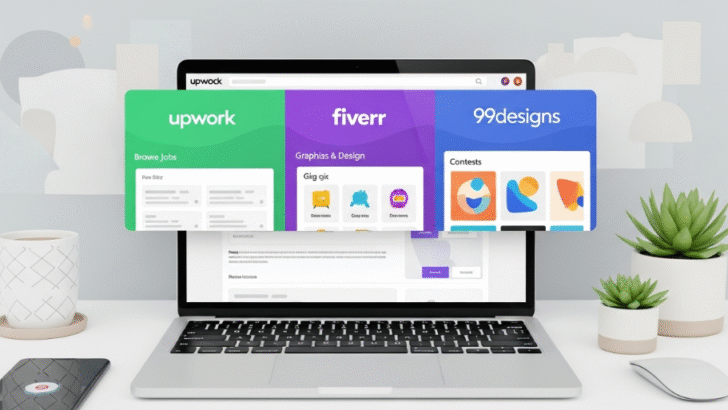
6. 99designs — Best for Designers

For:

  • logos

  • branding

  • packaging

  • illustrations

Offers creative contests + direct client work.


7. Guru — Best for Long-Term Repeat Work

Guru has a reputation for stable, long-term hiring relationships.


⚙️ How Do Freelance Marketplaces Work?

Step-by-step flow:

  1. Create an account

  2. Build your profile

  3. Showcase your portfolio

  4. Apply for jobs or publish service packages

  5. Communicate with clients

  6. Complete the project

  7. Get paid through platform escrow

  8. Collect reviews

Freelancers who consistently deliver high-quality work gain visibility and ranking boosts.


🌟 How to Choose the Right Freelance Marketplace

Ask yourself:

✔ What is my skill category?
✔ Do I want quick gigs or long-term contracts?
✔ Do I prefer low competition or high-paying clients?
✔ Do I want global or regional clients?

For beginners → Fiverr, Freelancer
For professionals → Upwork
For experts → Toptal
For designers → 99designs
For European clients → PeoplePerHour


🧠 Skills Needed to Succeed on Freelance Marketplaces

Hard Skills

  • writing, designing, coding, editing, marketing

  • niche specializations (AI tools, automation, consulting)

Soft Skills

  • communication

  • on-time delivery

  • professionalism

  • problem-solving

Marketplace Skills

  • writing proposal letters

  • pricing your services

  • optimizing your gig or profile

  • handling revisions

  • maintaining client relationships


💼 How to Stand Out on Freelance Marketplaces in 2026

⭐ 1. Build a Professional Profile

Your profile is your digital resume. Include:

  • clear headline

  • strong summary

  • portfolio samples

  • relevant skills

⭐ 2. Add High-Quality Portfolio Items

Clients judge by results—not education.

⭐ 3. Write Personalized Proposals

Avoid copy-paste. Show understanding of client goals.

⭐ 4. Start With Competitive Pricing

As reviews increase, raise your rates gradually.

⭐ 5. Communicate Quickly and Professionally

Fast replies improve your ranking.

⭐ 6. Use AI Tools to Improve Efficiency

AI helps with:

  • proposal writing

  • research

  • editing

  • project management

But maintain human creativity and problem-solving.


📈 The Future of Freelance Marketplaces

Freelance marketplaces will continue expanding as companies shift toward flexible hiring. More AI-integrated systems, smarter matching algorithms, and specialized micro-marketplaces will appear in the coming years.

Freelancers who build strong profiles early will dominate this industry.


🌟 Final Thoughts

Freelance marketplaces offer unlimited opportunities for anyone with digital skills. With the right platform, strategy, and consistency, freelancers can create stable, location-independent income in 2026 and beyond.

If you treat freelancing like a real business, these platforms can become powerful engines for long-term success.

⭐ Top Online Freelance Skills to Master in 2026: Build a High-Income Digital Career From Anywhere

The freelancing world continues to evolve rapidly, and in 2026, the demand for skilled online professionals is higher than ever. Companies, startups, and entrepreneurs are hiring freelancers for specialized skills that boost productivity, marketing performance, and digital transformation.

If you want to build a strong freelance career—or upgrade your income—the key is mastering the right online freelance skills that clients actively search for.

This guide explores the most in-demand freelance skills, why they matter, and how you can start mastering them today.


🌍 Why Online Freelance Skills Matter in 2026

Freelancing has shifted from a side hustle into a major career path. Here’s why developing online skills is essential:

1. Global Competition Requires Strong Skills

Freelancers now compete internationally. Better skills = better clients = higher rates.

2. AI Automation Raises the Standards

While AI tools automate tasks, clients still need skilled professionals who can think creatively and strategically.

3. Digital Transformation Creates New Job Categories

More businesses are moving online, increasing demand for digital-based roles.

4. Flexible, High-Paying Opportunities

People with high-value skills can:

  • work remotely

  • choose their clients

  • raise their rates

  • enjoy schedule freedom


🔥 Most In-Demand Online Freelance Skills in 2026

Below are the most valuable skills that help freelancers stand out and secure premium opportunities.


1. Content Writing & Copywriting

Writing remains one of the strongest freelance markets.

In-demand writing styles include:

  • SEO articles

  • sales copy

  • website content

  • email marketing

  • social media captions

  • UX microcopy

Clients want persuasive, clear, and SEO-optimized writing that drives results.


2. Graphic Design & Brand Design

Design is one of the most popular online freelance skills because every business needs visuals.

High-demand categories:

  • logo & branding

  • social media graphics

  • marketing materials

  • UI/UX design

  • illustration

  • presentation design

AI can assist—but cannot replace unique creative direction.


3. Video Editing & Motion Graphics

Video continues to dominate marketing platforms like TikTok, YouTube, and Instagram.

In-demand roles:

  • short-form video editor

  • YouTube editor

  • motion graphic designer

  • animation specialist

  • reels/tiktok content creator

These skills command high rates.


4. Web Development & Programming

Programming remains one of the highest-paying freelance fields.

Most popular skills:

  • full-stack development

  • WordPress development

  • e-commerce setup

  • web app creation

  • API integrations

Businesses want fast, user-friendly, mobile-first websites.


5. Digital Marketing

Freelance marketers help brands grow online.

Top specializations:

  • SEO

  • social media management

  • paid ads (Meta/Google)

  • email marketing

  • funnel creation

  • content strategy

Companies are willing to pay well for measurable marketing results.


6. Virtual Assistance & Administrative Skills

VAs support business owners with day-to-day operations.

High-value tasks include:

  • email management

  • customer support

  • scheduling

  • data entry

  • social media assistance

  • research

This is ideal for beginners entering freelancing.


7. AI Tool Mastery

AI skillsets are becoming mandatory.

Examples:

  • AI content editing

  • prompt engineering

  • AI workflow automation

  • chatbot-building

  • AI-based research

Clients need freelancers who can combine human creativity with AI efficiency.


📈 How to Choose Which Freelance Skill to Learn

Ask yourself:

✔ What am I naturally good at?

✔ What skills align with my long-term career goals?

✔ Which skills offer high earning potential?

✔ What do I enjoy working on daily?

Start with one skill → master it → earn → expand into a specialized niche.


🚀 How to Improve Your Freelance Skills in 2026

1. Take Online Courses Regularly

Use Coursera, Udemy, LinkedIn Learning, or Skillshare.

2. Practice Real Projects

Build portfolio pieces even before getting paid clients.

3. Use AI Tools to Learn Faster

AI can help you study, practice, and polish your output.

4. Learn Industry Tools

Examples:

  • Canva, Figma, Adobe Suite

  • Notion, Trello, Slack

  • ChatGPT, Claude, automation tools

  • WordPress, Webflow

5. Build a Strong Portfolio

Clients choose freelancers based on results—not degrees.


🌟 Final Thoughts: Your Freelance Success Starts With the Right Skills

Online freelance skills unlock global opportunities, high income, and career freedom. The more specialized your skill, the higher your earning potential. Choose a skill you enjoy, practice consistently, and position yourself as a professional in your niche.

2026 is the perfect year to start building your freelance career—because the world is more digital, flexible, and skill-focused than ever.


⭐ Remote Work Opportunities in 2026: How to Build a Flexible, High-Income Career From Anywhere

Remote work is no longer a temporary trend—it has evolved into a long-term movement shaping how people build careers, grow income, and achieve work–life balance. As global companies continue embracing hybrid and fully remote systems in 2026, the opportunities for skilled professionals have expanded dramatically.

Whether you’re a freelancer, job seeker, or someone transitioning from corporate life, understanding how remote work operates—and how to position yourself competitively—is the key to long-term success.

This guide explores modern remote work opportunities, in-demand roles, required skills, and strategies to thrive in a digital-first career environment.


🌍 What Makes Remote Work So Popular in 2026?

1. Global Hiring Becomes the Norm

Companies no longer limit recruitment to one city or one country. Employers want the best talent—wherever it is. This creates more opportunities for professionals in developing countries to compete globally.

2. Cost Efficiency for both Parties

Remote work reduces office costs for companies and commuting costs for workers. It’s a win-win model.

3. Career Flexibility

Professionals can work:

  • from home

  • while traveling

  • part-time or full-time

  • as a freelancer or employee

This flexibility boosts productivity and job satisfaction.

4. Remote Tech Tools are More Advanced Than Ever

AI-driven tools like automation platforms, project management systems, and intelligent workspaces make collaboration seamless across time zones.


🔥 Top Remote Work Opportunities in 2026

1. Content Writing & Copywriting

Demand is rising for:

  • SEO writers

  • email copywriters

  • social media writers

  • UX copywriters

  • long-form content creators

This role suits people with strong communication and storytelling skills.


2. Graphic Design & Multimedia

Digital-first companies need designers for:

  • branding

  • ads

  • UI/UX

  • video content

  • web graphics

Remote design collaboration feels smoother due to improvements in cloud-based design software.


3. Virtual Assistance

VAs handle:

  • administrative tasks

  • email management

  • scheduling

  • social media

  • data entry

This role is ideal for organized self-starters.


4. Software Development & Engineering

One of the most in-demand categories, including:

  • backend engineers

  • full-stack developers

  • mobile developers

  • DevOps engineers

Companies compete to hire top developers remotely.


5. Digital Marketing

A massive growth field. Remote opportunities include:

  • SEO specialists

  • social media managers

  • paid ads specialists

  • content strategists

  • email marketing experts

Digital marketing remains future-proof thanks to constant online business growth.


6. Online Teaching & Coaching

Remote teaching has expanded beyond English tutoring. People now teach:

  • design

  • coding

  • fitness

  • business skills

  • personal development

Platforms like Udemy, Skillshare, and private Zoom classes make this highly accessible.


7. Customer Support & Live Chat

Remote customer service roles are rising fast. Many companies offer:

  • flexible schedules

  • weekend-only shifts

  • international remote hiring

AI automation supports agents but does NOT replace them—humans are still needed for complex interactions.


⚙️ Skills You Need to Succeed in Remote Work

Hard Skills

  • writing or designing

  • marketing

  • coding

  • data analysis

  • project management

  • AI tool mastery

Soft Skills

  • communication

  • time management

  • self-discipline

  • problem-solving

  • adaptability

Tech Tools

  • Zoom / Google Meet

  • Notion / Trello / Asana

  • Slack / Teams

  • Canva / Figma

  • ChatGPT / Claude / automation tools

Learning these tools helps you stand out in global remote job markets.


💼 Where to Find Remote Work Opportunities

Here are the best platforms in 2026:

  • Upwork

  • Fiverr

  • LinkedIn

  • RemoteOK

  • We Work Remotely

  • FlexJobs

  • Indeed Remote

  • Toptal (for advanced professionals)

Choose platforms based on your skill level and niche.


🚀 Tips to Stand Out in Remote Job Applications

1. Tailor Every Proposal

Personalize your pitch to each job posting.

2. Build a Strong Portfolio

Proof of work is more important than a diploma.

3. Communicate Clearly and Professionally

Clients prefer people who write and speak clearly.

4. Learn One High-Income Skill

Specialization increases income dramatically.

5. Use AI Tools to Improve Productivity

AI does NOT replace workers—it enhances their output.


🌟 The Future of Remote Work Is Bright

The shift toward remote-first work is accelerating. In 2026, professionals with solid digital skills can build stable careers without geographical limits. Whether you want more flexibility, better income, or global client opportunities, remote work opens doors to all of it.

If you prepare your skills and position yourself well, you’ll thrive in this new digital era.

How to Start Freelancing in 2026: A Complete Beginner’s Guide to Building Your First Online Income

Freelancing has become one of the most accessible ways to earn money online in 2026. Whether you’re a designer, writer, video editor, virtual assistant, marketer, or simply someone with a skill to offer, freelancing allows you to work from anywhere, set your own rates, and choose the clients you want to work with.

But many beginners struggle with one big question:
“How do I actually start freelancing?”

This comprehensive, EEAT-driven guide will walk you step-by-step through the process, even if you have zero experience.


Why Freelancing Is Exploding in 2026

1. Remote work is now normal

Companies worldwide are shifting to hybrid or fully remote work. Outsourcing to freelancers allows them to access specialized talent quickly without long-term commitments.

2. AI makes work easier but increases demand for human skills

AI tools accelerate productivity, but clients still need humans for:

  • creativity

  • strategy

  • communication

  • decision-making

Freelancing becomes more valuable, not less.

3. Businesses need more digital content

Every brand needs:

  • social media posts

  • websites

  • ads

  • videos

  • logos

  • customer support

Freelancers fill those gaps.


Step 1: Identify Your Freelance Skill

You don’t need to be an expert. Start with what you already know.

Examples of easy-to-start freelance skills:

  • graphic design

  • writing

  • data entry

  • video editing

  • translation

  • virtual assistance

  • customer support

  • social media management

  • product research

  • simple website building

If you don’t have a skill yet:

Learn one free from:

  • YouTube

  • Coursera

  • Google SkillShop

  • Canva tutorials

  • HubSpot Academy


Step 2: Define Your Niche (Optional but Powerful)

Niching down helps you attract better clients.

Examples:

Instead of → graphic designer
Say → logo designer for small businesses

Instead of → writer
Say → blog writer for health & wellness brands

Instead of → video editor
Say → short-form TikTok/Reels editor

Specialists earn more.


Step 3: Build a Simple Portfolio (Even With No Experience)

Clients want proof of your ability.

You can create:

  • 5 sample works

  • 3 mock projects

  • before/after comparisons

  • personal designs

  • case studies

No clients yet? Create your own sample projects.

Tools:

  • Behance

  • Dribbble

  • Notion

  • Canva portfolio

  • Google Drive folder


Step 4: Set Your Freelance Rates

Beginner-friendly pricing:

  • Hourly: $10–$25

  • Project-based: $50–$300

  • Monthly retainer: $200–$800

Don’t underprice yourself—clients often equate price with quality.


Step 5: Create Your Freelance Profiles

Best platforms in 2026:

  • Upwork

  • Fiverr

  • Freelancer

  • PeoplePerHour

  • 99designs

  • Toptal (for experts)

  • LinkedIn

  • Instagram/TikTok for showcasing your work

Tips:

  • Use a professional profile photo

  • Write a clear headline

  • Describe what problem you solve

  • Add 3–5 strong portfolio examples


Step 6: Start Applying for Jobs (The Right Way)

Most beginners fail because they apply with generic proposals.

Winning proposal formula:

  1. Open with a personalized greeting

  2. Mention something specific from the job post

  3. Explain how you will solve their problem

  4. Show 1–2 relevant samples

  5. Offer a small bonus (speed, extra concept, free revision)

  6. End with a simple call to action


Step 7: Deliver Great Work and Start Building Your Reputation

Success in freelancing comes from:

  • communicating clearly

  • understanding instructions

  • delivering fast

  • being reliable

  • providing value

Good reviews = more clients = higher income.


Step 8: Scale Your Freelance Career

Once you have momentum, you can:

  • raise your rates

  • offer retainer packages

  • specialize further

  • create a personal brand

  • build templates or digital products

  • turn your freelancing into a micro-agency

Freelancing can become a full-time, stable career.


Common Mistakes Beginners Should Avoid

  • underpricing their work

  • using low-quality sample projects

  • replying late to messages

  • not reading client instructions

  • being inconsistent

  • not publishing their work online

  • depending on one platform only

Avoid these, and you’ll grow much faster.


Is Freelancing Worth It in 2026? Absolutely.

Freelancing gives you:

  • income flexibility

  • time freedom

  • location independence

  • creative freedom

  • long-term career opportunities

More people will freelance in 2026 than ever before—this is your chance to start strong.

Freelance Jobs: A Complete Guide to Starting, Succeeding, and Thriving as a Modern Freelancer

Freelancing has rapidly transformed from a side income option into a full-time career path for millions of people around the world. With flexible schedules, global opportunities, and the freedom to choose your clients and projects, freelance jobs continue to grow across multiple industries—from design and writing to programming, marketing, consulting, and more.

This guide will help you understand what freelance jobs are, how to get started, the skills you need, where to find clients, how to price your services, and how to build a long-term and sustainable freelance career.


What Are Freelance Jobs?

Freelance jobs are project-based or contract-based tasks completed independently rather than through traditional employment. Freelancers are self-employed professionals who provide services to clients without long-term commitment.

Freelancers often work in:

  • Graphic design

  • Web development

  • Writing & copywriting

  • Digital marketing

  • UI/UX design

  • Virtual assistance

  • Social media management

  • Video editing

  • Consulting

  • Data entry

  • Translation

  • SEO services

The freelancing world has expanded so much that almost every digital skill now has freelance opportunities.


Why Freelance Jobs Are Growing Fast

Freelancing has become a global phenomenon because it offers advantages for both workers and companies:

For freelancers:

  • Flexible schedule

  • Work from anywhere

  • Control over workload

  • Higher earning potential

  • Choice of clients and industries

For clients:

  • Faster hiring process

  • Access to specialists

  • Lower operational costs

  • Scalability

The digital economy has made it easier for freelancers to connect with clients around the world.


Best Platforms to Find Freelance Jobs

Here are the top websites where freelancers can start finding work today:

Upwork

Largest global marketplace for professional freelancers.

Fiverr

Best for creative and micro-services.

Freelancer.com

Wide range of job categories and contests.

Toptal

Premium platform for top-tier developers, designers, and consultants.

LinkedIn Jobs

Ideal for professional service roles and corporate clients.

Behance / Dribbble

For designers seeking creative freelance opportunities.

Remote.co & WeWorkRemotely

Great for long-term freelance contracts and remote positions.


Most In-Demand Freelance Jobs in 2026

According to current market trends, these freelance jobs have the highest demand:

✔ Graphic Designer

Logos, branding, social media, packaging, marketing materials.

✔ Web Developer

Front-end, back-end, full stack, WordPress.

✔ Content Writer

Blog writing, copywriting, SEO content, email writing.

✔ Social Media Manager

Content creation, strategy, analytics.

✔ Video Editor

Short-form content (TikTok, Reels), ads, YouTube videos.

✔ Virtual Assistant

Administrative tasks, scheduling, customer support.

✔ SEO Specialist

Keyword research, website optimization, technical SEO.

✔ UI/UX Designer

User interfaces, wireframes, design systems.

✔ Digital Marketer

Paid ads, funnels, marketing strategy.

✔ Mobile App Developer

iOS, Android, cross-platform apps.


Skills You Need to Succeed in Freelance Jobs

Success in freelancing requires both technical skills and soft skills.

Technical Skills (Depending on Your Niche)

  • Design tools (Photoshop, Illustrator, Figma)

  • Programming languages (HTML, CSS, JS, Python)

  • Writing & editing

  • Video creation

  • Marketing analytics

  • SEO strategy

Soft Skills (Universal for All Freelancers)

  • Communication

  • Time management

  • Critical thinking

  • Problem solving

  • Negotiation skills

  • Client management

A freelancer who combines both sets of skills usually earns more and attracts better clients.


How to Start Freelancing (Step-by-Step)

1. Choose Your Niche

Identify the service you offer and the industry you want to serve.

2. Build a Simple Portfolio

Show your best work, even if it’s self-initiated or practice projects.

3. Set Your Price

Choose between:

  • Hourly rate

  • Per-project rate

  • Value-based pricing

4. Create Profiles on Freelance Platforms

Use clear descriptions, keywords, and professional branding.

5. Pitch to Clients

Start with small projects, then build toward bigger, higher-paying clients.

6. Deliver High-Quality Work

Reliability is the key to long-term success.

7. Ask for Testimonials

They increase credibility and help you win more jobs.


Common Challenges in Freelance Jobs (and How to Overcome Them)

❗ Inconsistent income

→ Solution: Create multiple income streams and retain long-term clients.

❗ Difficult clients

→ Solution: Use contracts and clear communication.

❗ Productivity issues

→ Solution: Use tools like Notion, Trello, or Google Calendar.

❗ Underpricing your work

→ Solution: Research market rates and adjust based on experience.


Tips for Thriving as a Long-Term Freelancer

  • Specialize in a profitable niche

  • Build a strong personal brand

  • Invest in marketing yourself

  • Upskill regularly

  • Create multiple portfolio case studies

  • Network with other freelancers

  • Automate repetitive tasks

  • Focus on client retention

Freelancing is not just about finding jobs—it’s about building a stable, scalable career.


Conclusion

Freelance jobs provide flexibility, creative freedom, and global opportunities. With the right skills, strategy, and mindset, anyone can start building a sustainable freelance career. Whether you’re a designer, writer, developer, or marketer, the freelancing world offers endless possibilities for growth and independence.

Top Freelancing Platforms for Graphic Designers in 2025

The freelance world keeps evolving, and for graphic designers, it has never been more exciting — or competitive.
With the rise of AI, digital tools, and global remote work, designers now have countless opportunities to find clients and grow their careers online.

But which platforms are really worth your time in 2025? Let’s explore the best freelancing websites that help designers find work, build portfolios, and earn consistent income.


1. Upwork – The Professional Freelance Marketplace

Upwork remains the top freelancing platform for experienced designers who want to work with established clients.
With features like project proposals, verified client ratings, and long-term contracts, it’s perfect for building a stable freelance career.

💡 Best for: Designers who already have strong portfolios and want reliable, high-value projects.

Pro tip: Optimize your profile with specific keywords like “brand identity designer” or “UI/UX specialist” to appear in client searches.


2. Fiverr – Fast, Accessible, and Great for Beginners

Fiverr has transformed from a $5 gig platform into a serious creative marketplace.
Designers can offer pre-packaged services (like “Logo Design with Brand Guide”) and attract clients who want quick turnarounds.

💡 Best for: Freelancers who want to build experience, attract fast clients, or test new services.

Why it works: Fiverr’s SEO-like system rewards clear titles and eye-catching visuals — meaning your presentation matters as much as your skill.


3. Toptal – Elite Network for Top Designers

Toptal is a curated platform for high-end freelancers. Only the top 3% of applicants get accepted.
If you make it in, you’ll work with global brands and earn premium rates.

💡 Best for: Senior designers or brand specialists who value quality over quantity.

Bonus: Toptal offers flexible schedules and client matching — perfect for pros who want consistent, serious projects.


4. 99designs by Vista – Logo and Brand Design Hub

99designs is built specifically for graphic designers.
It uses design contests where multiple designers submit ideas, and clients choose the best one.

While it can be competitive, it’s a great way to build your portfolio, get exposure, and learn what real clients want.

💡 Best for: Logo, branding, and packaging designers who enjoy creative challenges.


5. Contra – The Future of Commission-Free Freelancing

Contra is a rising star in the freelance space. It’s built for creatives — designers, marketers, and developers — and takes zero commission from your earnings.

You can create a portfolio, showcase case studies, and even link your social media presence to attract clients directly.

💡 Best for: Designers who want independence, control, and direct client relationships.


6. Behance – The Creative Network That Gets You Hired

Many designers think of Behance as a portfolio site — but it’s also a powerful job-finding platform.
Brands often reach out directly to designers whose portfolios stand out.

💡 Best for: Designers focused on long-term visibility and brand collaborations.

Pro tip: Keep your projects detailed and well-tagged to appear in search results for design agencies and recruiters.


7. Dribbble – Perfect for UI, Branding, and Digital Designers

Dribbble isn’t just for showing off designs — it’s a hiring platform.
You can apply for freelance gigs, remote contracts, and even full-time creative positions.

💡 Best for: UI/UX, app, and web designers looking for modern, creative projects.

Why it’s powerful: Many startups and design studios actively recruit talent here.


8. Designhill – Competitive and Rewarding

Designhill offers logo and brand contests, similar to 99designs, but with a broader marketplace.
It’s a great platform for designers who love competition and want to test their creativity.

💡 Best for: Ambitious freelancers who enjoy client challenges and fast-paced projects.


9. Worksome – Freelancing Meets Recruitment

Worksome focuses on connecting freelancers with enterprise-level clients — often with long-term contracts.
It’s becoming popular in Europe and North America for creative professionals seeking stability.

💡 Best for: Experienced designers seeking structured, well-paid remote contracts.


10. LinkedIn Services – The Hidden Gem

Don’t underestimate LinkedIn. Its “Services” feature allows designers to promote their freelance offerings and get discovered by potential clients organically.

💡 Best for: Designers who already network professionally or want to attract B2B projects.


Conclusion

Whether you’re just starting your freelance journey or scaling your design business, the right platform can make all the difference.
From Fiverr’s accessibility to Toptal’s exclusivity, each marketplace serves a unique purpose.

The best strategy?
👉 Pick one or two platforms that match your goals, stay consistent, and let your portfolio do the talking.

In 2025, being visible, adaptable, and authentic is the ultimate freelance advantage.