Freelance Client Management Tips: How to Build Stronger Relationships and Secure Repeat Work

Managing clients effectively is one of the most powerful skills a freelancer can develop. Strong client relationships not only lead to smoother projects—they also turn into long-term partnerships, consistent income, referrals, and a stable freelance career. Whether you’re a designer, writer, marketer, developer, or virtual assistant, mastering client management helps you stand out in a competitive marketplace.

In this article, you’ll learn the best freelance client management tips to help you work professionally, communicate clearly, and create exceptional client experiences.


Why Client Management Matters in Freelancing

Most freelancers focus heavily on skills and portfolio-building. But the truth is:
clients don’t just hire skills—they hire people they trust.

Good client management leads to:

  • repeat projects

  • long-term retainers

  • smooth collaboration

  • positive testimonials

  • word-of-mouth referrals

This is how freelancers move from unstable income to predictable success.


1. Set Clear Expectations from Day One

Start every project with clarity. Miscommunication is the #1 cause of disputes. Make sure both you and the client understand:

  • project scope

  • deadlines

  • deliverables

  • revisions included

  • communication style

  • payment terms

Put everything in writing—preferably in a contract. The clearer the agreement, the fewer the problems later.


2. Communicate Proactively (Not Just When Asked)

Clients appreciate updates, even short ones.

You should regularly update them about:

  • progress

  • upcoming milestones

  • delays (if any)

  • questions or needed clarifications

Proactive communication makes clients feel valued and secure.

Tip: Send a weekly update for longer projects. It builds trust instantly.


3. Use Tools to Stay Organized

Freelancers who stay organized appear more professional and dependable. Use tools like:

  • Notion – project tracking

  • Trello or Asana – task management

  • Google Drive – file organization

  • Slack – communication

  • Calendly – meeting scheduling

When clients see you are structured, they respect your process more.


4. Learn to Handle Difficult Clients Calmly

Not every client will be easy. But your professionalism must stay consistent.

When facing conflict:

  • stay calm

  • respond with solutions, not emotions

  • focus on facts, not assumptions

  • set boundaries politely

  • document everything

A professional tone can turn a tense situation into a successful project.


5. Ask the Right Questions Before Starting the Project

Great work comes from great briefs. Ask detailed questions like:

  • What goal should this project achieve?

  • Who is the target audience?

  • What style or tone do you prefer?

  • What examples do you like or dislike?

  • What is the timeline?

  • What defines success for you?

The more details you gather, the better your output—and the happier your client.


6. Deliver Before the Deadline

One of the best ways to impress a client is to deliver early.

You look:

  • reliable

  • disciplined

  • highly professional

This increases your chances of getting repeat work and referrals.


7. Provide a Polished Client Experience

Send deliverables in a professional format:

  • clean, organized files

  • clear naming structure

  • multiple file versions (if relevant)

  • short explanation or guide

Clients remember freelancers who make their work easier.


8. Ask for Feedback (and Actually Use It)

After delivering a project, ask for feedback:

  • What did you like?

  • What can be improved?

  • Is there anything else I can assist with?

This shows humility, professionalism, and initiative.


9. Upsell or Offer Ongoing Support

Smart freelancers don’t just finish a project—they extend the relationship.

Example upsells:

  • “Would you like me to help maintain this monthly?”

  • “I can create a social media version of this design if needed.”

  • “I can help you update the content regularly.”

Clients love freelancers who think ahead and offer value.


10. Always Follow Up After Project Completion

A simple follow-up message can bring new work.

Example:

“Hi! I hope the project is going well. If you need any updates or new tasks, I’m happy to assist.”

Never underestimate the power of continuing the relationship.


Conclusion

Mastering freelance client management is not just a nice skill—it’s essential for long-term freelance success. When you communicate clearly, stay organized, remain professional, and build genuine relationships, clients will trust you, hire you again, and recommend you to others.

Client management = long-term income stability.

Client Follow-Up with a Psychology-Based Approach: More Persuasive, Less Pushy

Following up with clients isn’t just about reminding them—it’s about understanding how people think, decide, and respond. By applying psychological principles, you can create follow-up messages that feel natural, persuasive, and respectful. This approach helps you improve response rates without sounding aggressive or desperate.

Below is the full English article:


Understanding the Psychology Behind Effective Follow-Ups

Client decisions are influenced by emotions, cognitive biases, and the way information is delivered. When your follow-up messages tap into these psychological triggers, clients become more open, responsive, and trusting.

A psychology-based approach helps you:

  • Communicate more empathetically

  • Reduce friction and resistance

  • Motivate clients to take action

  • Build long-term trust and credibility


1. Use the Principle of Social Proof

People feel more confident when they know others have made similar decisions.

How to apply:
Mention positive experiences from past clients.

Example:
“Several clients found this package helpful for launching their brand—happy to help you achieve similar results.”


2. Apply the Scarcity Effect (Ethically)

When something has limited availability, people value it more.

How to apply:
Use light reminders about deadlines or limited slots—without sounding pushy.

Example:
“I still have a slot available this week if you’d like me to begin your project.”


3. Use the Reciprocity Principle

People naturally want to give back when they receive value.

How to apply:
Give something useful before asking them to decide—a suggestion, idea, or small audit.

Example:
“I checked your current branding; here’s a quick improvement idea you can apply right away.”


4. Leverage the “Foot-in-the-Door” Technique

Small commitments lead to bigger commitments.

How to apply:
Ask a simple, low-pressure question instead of pushing for a final decision.

Example:
“Would you prefer version A or B? I can proceed based on your choice.”


5. Use Empathy-Based Messaging

Clients respond better to messages that understand their situation and reduce pressure.

How to apply:
Acknowledge their busy schedule.

Example:
“I know your schedule might be full—just checking in to see if I can assist with anything.”


6. Trigger the Power of Clarity

People take action faster when instructions are simple and clear.

How to apply:
End with a specific, easy question.

Example:
“Would you like me to proceed with the design this week?”


Psychology-Based Follow-Up Message Example

Example message:
Hi [Name], hope you’re doing well. I had a look at your project notes again and I believe option A could help you get results faster (based on what similar clients have achieved).
I still have an open slot this week if you’d like me to proceed.
Would you prefer Option A or B?


Natural, persuasive, not pushy.

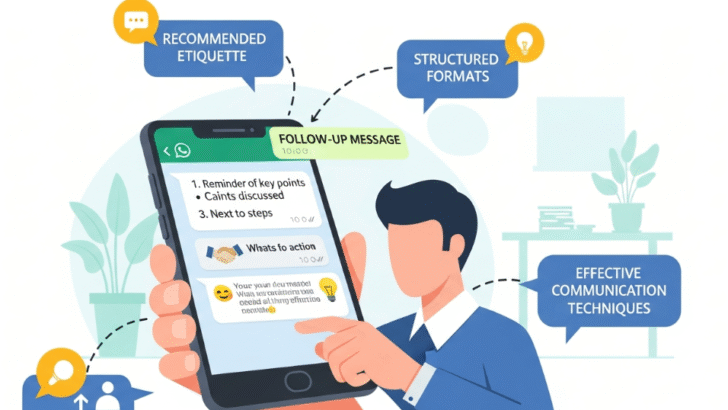
Client Follow-Up via WhatsApp: Etiquette, Format, and Message Examples

Following up with clients through WhatsApp can be highly effective when done correctly. It is fast, personal, and widely used—making it the perfect platform for professional communication. However, without proper etiquette and structure, your messages can feel intrusive or unprofessional.
This guide explains the right etiquette, ideal message formats, and ready-to-use templates you can apply immediately.


1. WhatsApp Follow-Up Etiquette

1. Be respectful of timing

Avoid messaging early in the morning, late at night, or on weekends unless the client has given permission.
Best time: 09:00–17:00.

2. Keep messages short and clear

Clients prefer concise messages—avoid long paragraphs and unnecessary small talk.

3. Don’t spam

If the client hasn’t responded, avoid sending too many reminders. Give space between follow-ups.

4. Use a professional tone

Emojis are acceptable but use them minimally. No slang, no voice notes unless allowed.

5. Personalize your messages

Mention the client’s name, project, or previous discussion to show attentiveness.

6. End with a clear CTA

Example:

  • “Would you like to proceed?”

  • “Do you need any revisions?”

  • “Which option do you prefer?”


2. Recommended WhatsApp Follow-Up Format

Here’s a simple and effective structure you can follow:

✓ Greeting

“Hi [Client Name], hope you’re doing well.”

✓ Context

“I’m following up regarding [project/quotation/file sent].”

✓ Value or clarity

“I just want to ensure everything is clear and assist you if needed.”

✓ CTA (Call to Action)

“May I confirm if we can proceed?”
or
“Do you need adjustments before moving forward?”

✓ Polite closing

“Thank you and feel free to reach out anytime.”


3. WhatsApp Follow-Up Message Examples

A. Initial Follow-Up (Day 1–2)

Example:
Hi [Name], hope you’re doing great. I’m following up regarding the proposal I sent yesterday. Let me know if you have any questions or need adjustments. Happy to help!


B. Reminder Follow-Up (Day 3–5)

Example:
Hi [Name], just checking in regarding my previous message about the design proposal. No rush—just making sure you received it and everything is clear. 😊


C. Final Follow-Up (Day 7+)

Example:
Hi [Name], this is a quick follow-up regarding your project. I’ll keep the slot open for you until [date]. If you’d like to proceed or need revisions, feel free to let me know anytime. Thank you!


D. Follow-Up After a Silent Client

Example:
Hi [Name], hope you’re doing well. Just checking in—do you still need help with the project? No pressure at all, I just want to make sure I’m supporting you at the right time.


E. Follow-Up After Sending Work / Draft

Example:
Hi [Name], I hope the draft looks good on your side. Let me know if you want any changes. I can adjust it today if needed.

Common Mistakes When Following Up With Clients and How to Avoid Them

Following up with clients is an essential part of business communication, whether you’re a freelancer, designer, marketer, or business owner. However, many professionals unintentionally make mistakes that cause clients to lose interest, delay their response, or even end communication altogether.

In this article, you’ll learn the most common follow-up mistakes—and more importantly, how to avoid them so that every follow-up increases your chance of success.


1. Following Up Too Frequently

Many people follow up every day, hoping it will make clients reply faster.
Instead, it makes you look desperate or pushy.

❌ Why This Is a Mistake

  • It overwhelms the client

  • It reduces perceived professionalism

  • It creates pressure rather than interest

✅ How to Avoid It

Use a healthy follow-up timeline:

  • 24 hours after initial contact

  • 2–3 days after the first follow-up

  • 5–7 days after the second

  • Then once every 2–4 weeks

Give clients space—it’s a sign of respect.


2. Following Up Too Late

Some people wait weeks before following up.
By then, the client forgets who you are or assumes you’re not interested.

❌ Why This Happens

  • Fear of being annoying

  • Lack of system

  • Overthinking the message

✅ How to Avoid It

Always send your first follow-up within 24–48 hours.
This shows you are present, engaged, and reliable.


3. Sending Long, Complicated Follow-Up Messages

Clients are busy.
If your follow-up looks like a long paragraph, they won’t read it.

❌ Why This Is a Mistake

  • Clients don’t have time

  • Important points get lost

  • The message becomes harder to reply to

✅ How to Avoid It

Keep it short and actionable:

“Just checking in to see if you had the chance to review my previous message.”

Short messages get faster replies.


4. Not Providing Context

Some professionals send a follow-up like:

“Any update?”

This leaves clients confused or frustrated, especially if they don’t remember the previous conversation.

❌ Why It Fails

  • Too vague

  • No reminder about the topic

  • Puts all the effort on the client

✅ How to Avoid It

Always include context:

“Hi John, just following up on the design proposal I sent last Thursday.”

This refreshes their memory instantly.


5. Being Too Aggressive or Salesy

Aggressive follow-ups push clients away.
Examples include:

  • “If you don’t respond, I’ll assume you’re not serious.”

  • “I need your answer today.”

❌ Why This Hurts You

  • Creates negative pressure

  • Damages your reputation

  • Makes clients feel disrespected

✅ How to Avoid It

Use a friendly, helpful tone:

“Let me know if you have any questions or need clarification—I’m happy to help.”

Follow-ups should feel supportive, not demanding.


6. Not Offering Value in Your Follow-Up

A follow-up that only asks for a reply is less effective.

❌ Why This Is Ineffective

Clients are busy; they respond to value, not reminders.

✅ How to Fix It

Add something useful:

  • A portfolio update

  • A relevant idea

  • A small insight

  • A benefit summary

Example:

“I also added a new branding case study that matches the style you’re looking for.”


7. Using the Wrong Channel

Some clients prefer email, others prefer WhatsApp, and some respond faster via phone.

❌ The Mistake

Following up on only one channel—even if it’s not the one they check most.

✅ How to Avoid It

Pay attention to their preferred communication style:

  • It’s in their previous replies

  • It may be stated directly

  • It can be judged from response speed

Match the client’s habits for better success.


8. Not Personalizing the Follow-Up

Generic messages feel cold and automated, like:

“Dear Sir/Madam, following up again…”

❌ Why This Is a Problem

  • Clients feel like a number

  • You lose the human connection

  • It reduces trust

✅ How to Avoid It

Use their name and specific project details:

“Hi Sarah, just checking in about the packaging design concept you mentioned last week.”

Small personalization = big impact.


9. Following Up Without a Clear Purpose

Messages like:

“Just checking in.”

…do not motivate clients to respond.

❌ Why It Fails

Clients need clarity, not vague reminders.

✅ How to Avoid It

Always include a purpose:

  • Asking for approval

  • Confirming next steps

  • Offering help

  • Requesting feedback

Example:

“Do you want me to proceed with Concept A or revisit the color direction?”

This creates a decision point, and clients respond more quickly.


10. Forgetting to Make It Easy for the Client to Reply

Sometimes, clients don’t respond because replying feels like effort.

❌ Examples

  • Too many questions in one message

  • No clear CTA

  • No simple options

✅ How to Avoid It

Give easy “Yes/No” choices:

“Would you like Option A or Option B?”
“Is Wednesday or Thursday better for you?”

Lower friction = higher response.


Conclusion

Most follow-up mistakes happen not because of bad intentions, but because of misunderstanding the client’s perspective. Effective follow-up is about timing, clarity, politeness, and making things easy for the client.

Avoiding common mistakes like following up too often, too late, or with unclear messages will instantly make you look more professional—and significantly increase your response rate and closing rate.

If you communicate with respect and consistency, clients will naturally feel more comfortable replying and working with you.

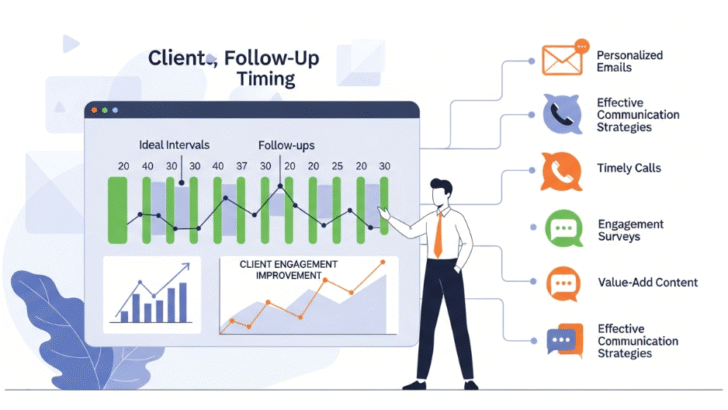
When Is the Best Time to Follow Up With Clients? A Complete Guide

Following up with clients is one of the most important skills in business—yet most professionals either follow up too soon, too late, or too aggressively. Timing is everything. When you follow up at the right moment, you increase the chances of getting a reply, securing a meeting, or even closing a deal.

This guide breaks down the best timing strategy for effective follow-ups, applicable for freelancers, agencies, designers, marketers, and service providers.


1. Follow Up Within 24 Hours After the First Contact

Whether you sent a proposal, received an inquiry, or finished an initial meeting, the first follow-up should come within 24 hours.

Why 24 hours?

  • The conversation is still fresh

  • You show professionalism

  • You demonstrate enthusiasm for the project

  • Clients feel valued and prioritized

What to send

A short message summarizing the discussion + next steps.


2. The Second Follow Up: 48–72 Hours Later

If the client doesn’t respond after your first follow-up, wait two to three days before following up again.

Why this timing works

  • Gives them space to check your message

  • Avoids coming across as pushy

  • Shows persistence without pressure

This follow-up should be polite, simple, and focused on clarity:
“Just checking in to make sure you received my previous message.”


3. The Third Follow Up: 5–7 Days After the Second

If the client still hasn’t responded, wait five to seven days before following up again.

Why this works

This timing respects their schedule while still showing that you are committed and reliable.

By this stage, people often notice your consistency and appreciate your professionalism.


4. Monthly Follow Ups for Cold or Dormant Leads

If the client remains silent after three follow-ups, don’t cut them off.
Instead, follow up once every 30 days with value-based messages, such as:

  • A new portfolio update

  • A relevant tip or insight

  • A seasonal offer

  • A friendly check-in

Why monthly?

  • Keeps you “top of mind”

  • Avoids annoying the client

  • Builds long-term trust

Many clients reply after months once they’re finally ready.


5. The Best Time of Day to Follow Up

Research shows that messages are most likely to be seen and answered during specific hours:

⏰ Best Times

  • 9:00 AM – 11:00 AM

  • 2:00 PM – 4:00 PM

These times work because clients are settled into their work routine but not overwhelmed.

❌ Worst Times

  • Very early morning

  • Lunch hour

  • After 5:00 PM

  • Weekends
    (unless you know the client prefers it)


6. The Ideal Follow-Up Frequency Timeline

Here is a simple timeline you can follow:

Follow-Up Schedule

  1. Day 1: First follow-up (24 hours)

  2. Day 3–4: Second follow-up

  3. Day 8–10: Third follow-up

  4. Every 30 days: Soft check-ins or value messages

This rhythm keeps communication professional and consistent.


7. Situations With Different Timing Rules

Not all follow-ups are the same. Here are common scenarios:


A. After Sending a Proposal

  • Follow up in 24 hours

  • Second follow-up after 3 days

  • Third follow-up after 7 days

Clients often need time to review pricing or discuss internally.


B. After a Meeting

Send your follow-up within the same day
(Or max 24 hours).

This shows you are organized and ready to move.


C. After a Cold Outreach Message

Wait 3–4 days before sending the first follow-up.

People usually ignore cold messages but may respond after seeing your persistence.


8. Signs You Should Follow Up Sooner

Follow up earlier when:

✔️ The client expressed urgency
✔️ There is a deadline involved
✔️ They asked you to remind them
✔️ They viewed your proposal but didn’t reply
✔️ They interacted with your email or website


9. Signs You Should Wait Longer

Delay your follow-up when:

❌ The client is on vacation
❌ They told you they are still reviewing
❌ It’s a weekend or holiday
❌ You just sent a long, detailed message
❌ You’ve followed up too frequently

Always respect the client’s communication patterns.


10. Final Tips for Perfect Timing

  • Never send more than three follow-ups per week

  • Always provide value, not pressure

  • Keep your messages short and easy to respond to

  • Use a friendly tone

  • Show genuine interest in helping, not chasing


Conclusion

The best follow-up timing balances persistence and respect.
By following a structured timeline—24 hours, 3 days, 7 days, monthly—you create a professional, predictable rhythm that encourages clients to reply.

Clients often choose the person who stays consistent, polite, and reliable.

If you follow the timing rules in this guide, you’ll see more replies, more conversions, and stronger client relationships.

How to Communicate Better with Clients as a Designer

Introduction
Being a great designer isn’t just about creating stunning visuals — it’s also about how well you communicate with your clients.

Many talented designers lose projects, not because of poor design skills, but because of miscommunication. Whether it’s unclear expectations, delayed feedback, or misunderstood revisions, communication can make or break a client relationship.

So, how can you improve your client communication and build stronger, more professional partnerships? Let’s dive into strategies that every designer — from freelancers to agency pros — should master.


1. Understand Your Client’s Vision Before You Design

Before starting any project, make sure you fully understand what the client wants — and sometimes, what they don’t know they want.

Ask clear, open-ended questions like:

  • “What is the main goal of this project?”

  • “Who is your target audience?”

  • “What emotions do you want your brand to evoke?”

💡 Pro tip: Use a short creative brief or onboarding questionnaire. It helps align expectations early and avoids endless revisions later.


2. Communicate Professionally and Consistently

Clients appreciate designers who are clear, polite, and consistent in their communication.

Here are some habits to build trust:

  • Reply within 24 hours.

  • Use simple, professional language.

  • Summarize meetings or calls with a short recap email.

  • Set clear timelines for each stage of the project.

💬 Think of communication as part of your brand. The more professional you sound, the more confident clients will feel in your work.


3. Set Boundaries and Manage Expectations

One of the biggest mistakes designers make is saying yes to everything.

Be transparent about:

  • Your availability and working hours.

  • How many revisions are included in your pricing.

  • What counts as “scope creep” (extra work outside the agreement).

By setting boundaries from the start, you prevent frustration later — for both you and your client.

💡 Pro tip: Include a “communication policy” in your contract to define timelines and revision limits clearly.


4. Learn to Listen — Really Listen

Good communication isn’t about talking; it’s about listening actively.

When clients share feedback, avoid jumping to defend your design. Instead, listen, take notes, and clarify what they really mean.

For example:
Instead of “I don’t like this color,” ask “Can you tell me what kind of emotion or tone you’d like this color to convey?”

That small shift turns criticism into collaboration.


5. Translate Design Language into Business Language

Clients often don’t understand design jargon — and that’s okay. It’s your job to explain your choices in a way that connects to their business goals.

For example:
Instead of saying, “This logo uses complementary color balance,”
try saying, “These colors help your brand feel more energetic and modern to younger audiences.”

When clients see that your design decisions align with their goals, they trust your expertise.


6. Handle Feedback Gracefully

Every designer gets tough feedback at some point. What separates professionals from amateurs is how they handle it.

Here’s how:

  • Stay calm and avoid taking it personally.

  • Ask clarifying questions to understand the reason behind the feedback.

  • Offer solutions instead of just agreeing or disagreeing.

💡 Example:
Instead of “That won’t work,” say “I see your point — here’s another approach that could achieve the same goal.”


7. Use Collaboration Tools Wisely

Using the right tools makes communication smoother and more transparent.

Here are a few popular ones:

  • Slack or Discord: Real-time discussions

  • Trello or Asana: Task tracking and deadlines

  • Figma or Adobe XD: Real-time design feedback

  • Loom: Record video explanations instead of long messages

These tools save time, reduce misunderstandings, and create a professional workflow that clients appreciate.


8. Be Honest and Transparent About Mistakes

Even the best designers make mistakes — and that’s okay. What matters is how you handle them.

If something goes wrong, communicate it early and offer a solution. Clients value honesty over perfection.
Owning your mistakes builds long-term trust and shows that you’re reliable and responsible.


9. Keep the Relationship Alive After the Project Ends

Good designers deliver files.
Great designers deliver relationships.

Send a follow-up message after the project:

  • Ask if they’re satisfied with the result.

  • Offer help with future updates or maintenance.

  • Thank them for trusting you.

Small gestures like this turn one-time clients into loyal, returning partners.


Conclusion

Communication is the invisible skill that defines successful designers.

When you learn to listen, clarify, and express ideas clearly, you don’t just make better designs — you build stronger partnerships, gain repeat clients, and grow your reputation.

Remember: Design solves problems, and good communication makes sure those problems are understood.