When Is the Best Time to Follow Up With Clients? A Complete Guide

Following up with clients is one of the most important skills in business—yet most professionals either follow up too soon, too late, or too aggressively. Timing is everything. When you follow up at the right moment, you increase the chances of getting a reply, securing a meeting, or even closing a deal.

This guide breaks down the best timing strategy for effective follow-ups, applicable for freelancers, agencies, designers, marketers, and service providers.


1. Follow Up Within 24 Hours After the First Contact

Whether you sent a proposal, received an inquiry, or finished an initial meeting, the first follow-up should come within 24 hours.

Why 24 hours?

  • The conversation is still fresh

  • You show professionalism

  • You demonstrate enthusiasm for the project

  • Clients feel valued and prioritized

What to send

A short message summarizing the discussion + next steps.


2. The Second Follow Up: 48–72 Hours Later

If the client doesn’t respond after your first follow-up, wait two to three days before following up again.

Why this timing works

  • Gives them space to check your message

  • Avoids coming across as pushy

  • Shows persistence without pressure

This follow-up should be polite, simple, and focused on clarity:
“Just checking in to make sure you received my previous message.”


3. The Third Follow Up: 5–7 Days After the Second

If the client still hasn’t responded, wait five to seven days before following up again.

Why this works

This timing respects their schedule while still showing that you are committed and reliable.

By this stage, people often notice your consistency and appreciate your professionalism.


4. Monthly Follow Ups for Cold or Dormant Leads

If the client remains silent after three follow-ups, don’t cut them off.
Instead, follow up once every 30 days with value-based messages, such as:

  • A new portfolio update

  • A relevant tip or insight

  • A seasonal offer

  • A friendly check-in

Why monthly?

  • Keeps you “top of mind”

  • Avoids annoying the client

  • Builds long-term trust

Many clients reply after months once they’re finally ready.


5. The Best Time of Day to Follow Up

Research shows that messages are most likely to be seen and answered during specific hours:

⏰ Best Times

  • 9:00 AM – 11:00 AM

  • 2:00 PM – 4:00 PM

These times work because clients are settled into their work routine but not overwhelmed.

❌ Worst Times

  • Very early morning

  • Lunch hour

  • After 5:00 PM

  • Weekends
    (unless you know the client prefers it)


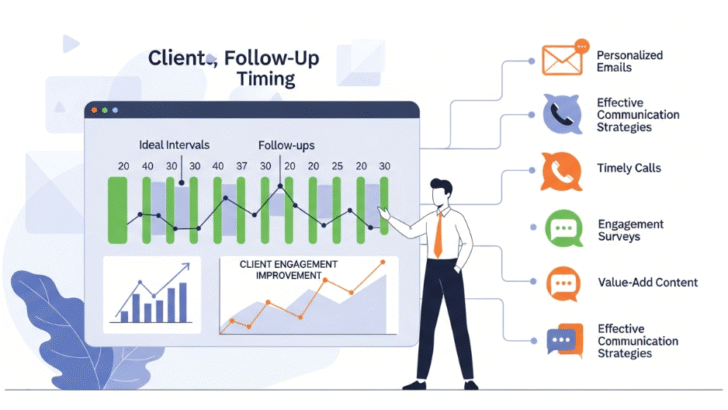
6. The Ideal Follow-Up Frequency Timeline

Here is a simple timeline you can follow:

Follow-Up Schedule

  1. Day 1: First follow-up (24 hours)

  2. Day 3–4: Second follow-up

  3. Day 8–10: Third follow-up

  4. Every 30 days: Soft check-ins or value messages

This rhythm keeps communication professional and consistent.


7. Situations With Different Timing Rules

Not all follow-ups are the same. Here are common scenarios:


A. After Sending a Proposal

  • Follow up in 24 hours

  • Second follow-up after 3 days

  • Third follow-up after 7 days

Clients often need time to review pricing or discuss internally.


B. After a Meeting

Send your follow-up within the same day
(Or max 24 hours).

This shows you are organized and ready to move.


C. After a Cold Outreach Message

Wait 3–4 days before sending the first follow-up.

People usually ignore cold messages but may respond after seeing your persistence.


8. Signs You Should Follow Up Sooner

Follow up earlier when:

✔️ The client expressed urgency
✔️ There is a deadline involved
✔️ They asked you to remind them
✔️ They viewed your proposal but didn’t reply
✔️ They interacted with your email or website


9. Signs You Should Wait Longer

Delay your follow-up when:

❌ The client is on vacation
❌ They told you they are still reviewing
❌ It’s a weekend or holiday
❌ You just sent a long, detailed message
❌ You’ve followed up too frequently

Always respect the client’s communication patterns.


10. Final Tips for Perfect Timing

  • Never send more than three follow-ups per week

  • Always provide value, not pressure

  • Keep your messages short and easy to respond to

  • Use a friendly tone

  • Show genuine interest in helping, not chasing


Conclusion

The best follow-up timing balances persistence and respect.
By following a structured timeline—24 hours, 3 days, 7 days, monthly—you create a professional, predictable rhythm that encourages clients to reply.

Clients often choose the person who stays consistent, polite, and reliable.

If you follow the timing rules in this guide, you’ll see more replies, more conversions, and stronger client relationships.