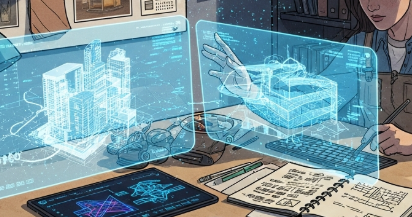
Artificial intelligence is transforming the creative industry faster than ever. From instant mockups to automated layouts and generative visuals, AI tools now support nearly every stage of design. But rather than replacing designers, AI is becoming what every creative professional needs most: a powerful partner.
This article explores how designers can integrate AI into their workflow, increase efficiency, elevate creativity, and maintain full ownership of their artistic identity.
⭐ 1. AI Is a Partner—Not a Replacement
The biggest misconception about AI is that it aims to take over creative jobs.
But the truth is simple: AI enhances tasks—designers create meaning.
AI can generate:
quick visual drafts
layout suggestions
color palette ideas
pattern variations
content summaries
But only humans can:
interpret client needs
craft emotional narratives
make conceptual decisions
understand culture and nuance
deliver original artistic visions
AI is powerful, but it lacks intuition, empathy, and emotional depth.
That’s where designers shine.
⭐ 2. Use AI to Speed Up Repetitive Work
Many parts of design are repetitive and time-consuming. AI tools can automate these tasks so designers can focus on creativity.
AI can help automate:
background removal
image enhancement
resizing for multiple platforms
layout rearrangements
cleaning/touch-ups
vector conversions
Instead of spending hours on production tasks, designers can dedicate more time to:
✨ ideation
✨ styling
✨ client communication
✨ exploration
✨ refinement
AI becomes a time-saving partner that clears the path for creativity.
⭐ 3. AI Helps Generate Ideas—Not Replace Your Own
One of AI’s greatest strengths is its ability to generate multiple variations quickly.
But these results are starting points, not final products.
You can use AI for:
initial concept brainstorming
style exploration
moodboard generation
drafting visual directions
testing unusual combinations
discovering new palettes or patterns
AI expands your creative possibilities, but the designer decides:
what fits the brief
what aligns with the brand
what feels meaningful
what deserves refinement
You remain the creative director.
⭐ 4. Curating AI Output Is a Designer’s New Superpower
Choosing, editing, and refining AI-generated output is now a key skill for modern designers.
A professional designer brings what AI lacks:
taste
judgment
consistency
brand alignment
storytelling ability
Design is not about producing visuals; it’s about making the right visual decisions.
AI gives you options—your artistic taste gives them purpose.
⭐ 5. Maintain Your Artistic Identity in an AI-Driven Workflow
To stay original, designers must embrace AI without letting it dilute their style.
Here’s how to keep your artistic identity intact:
✔ Use AI for efficiency, not for defining your style
✔ Refine AI output using your personal design approach
✔ Add manual touches that reflect your signature aesthetic
✔ Build a clear, recognizable portfolio that represents YOU
✔ Use AI as a supportive tool, not the main creator
Your uniqueness is your greatest advantage.
AI can mimic—but it cannot originate your personality, culture, and lived experience.
⭐ 6. Learn to Guide AI With Strong Creative Direction
AI becomes more powerful when the designer provides clear guidance.
To direct AI effectively:
write detailed prompts
define the style you want
explain mood, emotion, and message
specify constraints and brand rules
iterate and refine several times
Your direction shapes the results.
The better your creative vision, the stronger the AI output becomes.
⭐ 7. The Designer’s Role Evolves—But Becomes More Valuable
As AI takes over repetitive tasks, designers shift into more strategic roles.
The future designer will be:
a creative director
an art strategist
a problem-solver
a storyteller
a visual decision-maker
a brand builder
AI boosts your productivity, but you remain the driving force behind conceptual thinking.
⭐ Conclusion: AI Makes You More Creative, Not Less
When embraced correctly, AI becomes a transformative partner—one that gives you speed, flexibility, and room to create deeper, more meaningful work.
You are not being replaced.
You are being empowered.
AI opens doors.
Your imagination walks through them.